

Latest Blogs
View all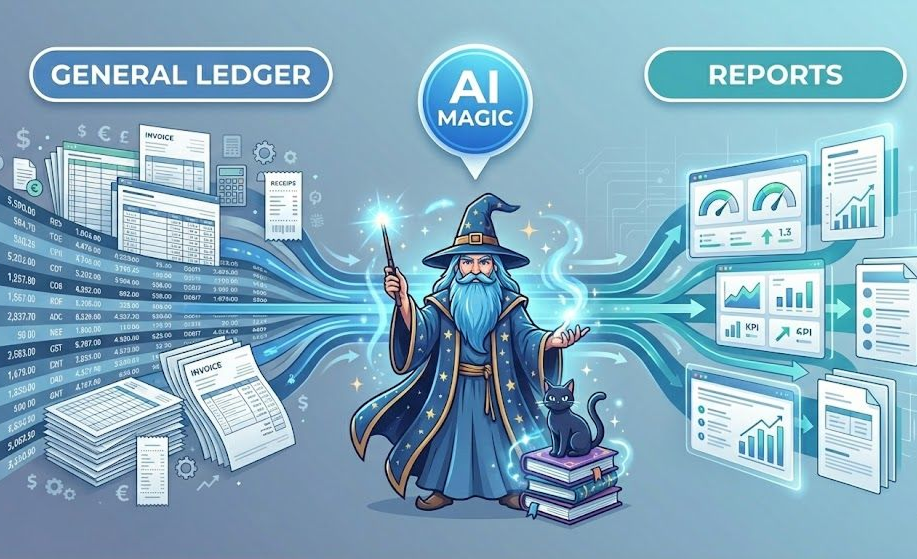






In today’s Private Equity landscape, the margin for error has disappeared along side the era of cheap debt. As a CEO, you are likely feeling the immense pressure to deliver operational results that were once easily achieved through financial engineering. However, there is a systemic, often hidden obstacle threatening your portfolio's success: the "EBITDA Mirage".
While the market demands rigorous operational performance,aggressive financial masking is setting your teams up for failure before theink on the deal is even dry. By the time a portfolio company is handed to the operations team, its EBITDA may be inflated by as much as 95% for marketing purposes through cost-saving projections and subjective adjustments.
This "Mirage" is not merely a reporting discrepancy; it represents a fundamental structural risk. Within mostfirms, a deep-seated tension exists between the deal team and the operational team. Deal teams are often incentivized to maximize leverage and utilize subjective financial "ad-backs" to create a more attractive Internal Rate of Return (IRR) on paper.
While these maneuvers make a deal look promising to committees, they dramatically increase the operational risk for the team tasked with the actual post-acquisition execution. To lead effectively, youmust mandate a "financial truth serum"—an elevated level offorensic accounting during due diligence. By employing a rigorous Quality ofEarnings (QoE) analysis, you can strip away the one-time boosts and identify the true, recurring earning power of a business. Without this baseline of transparency, your entire value creation strategy is built on sand.
The industry is already shifting to resolve this friction. We have entered an era where deal success relies 100% on the execution ofthe Value Creation Plan (VCP). Operations are no longer an after thought; leading firms are now dedicating 20–25% of their total due diligence time exclusively to identifying the three to five operational initiatives that will generate the most significant EBITDA uplift.
This shift has transformed the Operating Partner (OP)from a supportive role into a "Field General"—the primary leader responsible for driving strategic growth on the ground. This trend is accelerating rapidly, with 64% of Operating Partner teams reporting moderate or substantial growth in 2024 alone. These Field Generals are the ones who must bridge the gap between the "Mirage" and reality.
Even the most skilled Field General cannot be everywhere atonce. To scale excellence across an entire portfolio, you must move beyondsiloed, manual reporting and centralize your data. This is where A Iand consolidated financial data become your greatest competitiveadvantages.
By treating the cleansed data from your portfolio as a centralproprietary asset and pulling it into consolidated data lakes, you achievea level of transparency that was previously impossible. This infrastructureprovides two critical capabilities:
In this new environment, the Value Creation Plan is yourcore competency. To stay a step ahead of the competition, you must abandon management by intuition and embrace asymmetric intelligence.
By providing your Field Generals with a clear, AI-powered view of the "battlefield," you transform your portfolio from a fragmented collection of assets into a synchronized machine for value creation.You move from reacting to historical reports to proactively managing the future, ensuring that the EBITDA you report is not a mirage, but a sustainable,cash-backed reality.
An Analogy for Understanding: Navigating a portfolio using traditional, manipulated EBITDA reports is like a general trying to command a battle using a map hand-drawn by someone who has never seen the terrain. A consolidated AI data platform is your satellite reconnaissance.It doesn't replace the general's strategy, but it provides the high-resolution,real-time transparency needed to see where the front lines are actually moving—allowing you to deploy your resources with surgical precision.
#PrivateEquity #CEO #ValueCreation #OperatingPartners #AI#DataTransparency #EBITDA #Strategy

