Latest Blogs
View all


Every consolidation tool on the market makes the same foundational assumption: standardise your data first, then the system works. Map your charts of accounts. Clean your ERPs. Run a four-to-six-month implementation project. Then you're ready.
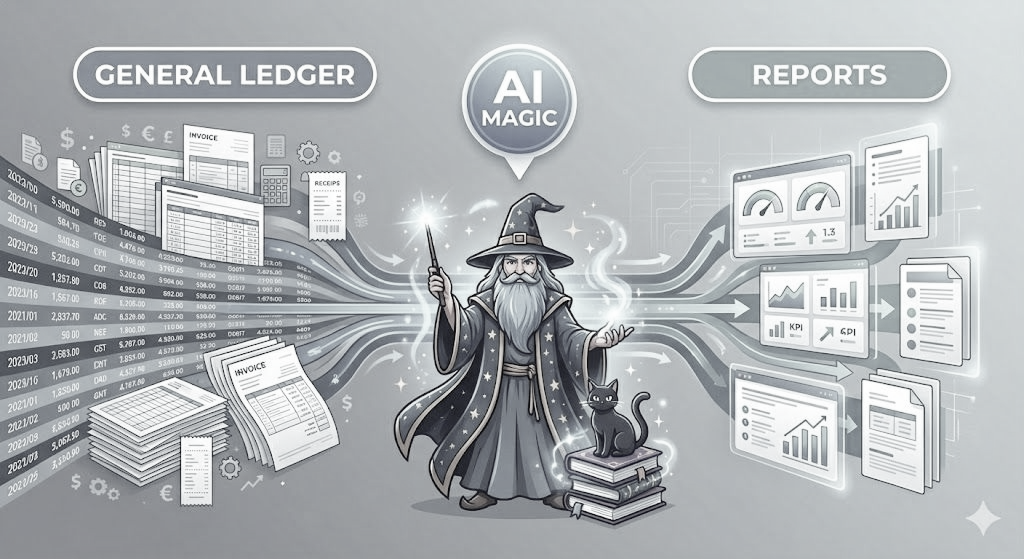
That assumption made sense when group structures were stable and everyone ran the same ERP. It breaks completely when the structure changes with every acquisition, every restructuring, every new SPV. And adding an AI layer on top of the same architecture doesn't fix the timing problem. You get better summaries of stale data. The reporting gap remains.
When I saw this pattern across every group I spoke to, I didn't see a product gap. I saw an architecture that needed to be rebuilt from first principles.
Connect ERPs as they are — no standardisation upfront. Automate account mapping with AI that understands financial logic, not account codes. Make consolidation continuous, not a monthly event.
When that architecture is in place, everything downstream changes.
Finance teams get their time back. A new acquisition contributes to group reporting within hours of connecting its ERP — not months after an implementation project. Controllers stop exporting, mapping, and reconciling by hand. The CFO who was assembling spreadsheets becomes the strategic adviser they were hired to be.
The analytical depth changes fundamentally. When data is consolidated at transaction level across every entity, analysis that was previously impossible becomes routine. Cross-entity benchmarking. Drill-down from a group P&L to individual transactions in any subsidiary. Anomalies surface when they happen — not at month-end when it's too late to act. The board doesn't just get a number. They get the ability to ask why, and get an immediate answer.
Corvenia is live across 51 subsidiaries across PE portfolios, family offices, and multi-entity groups that were stuck in spreadsheets. 95% reduction in consolidation time. Consolidated financials they trust, faster than they thought possible.
If you recognised your group in this series — whether you're managing a PE portfolio, a family office, a holding company, or any multi-entity structure that has grown past what its reporting can handle — the architecture problem is solvable. Without a heavy IT project.